


There is no universally agreed set time to replace gloves
A pair used to handle abrasive metal components may wear differently from the same glove used for light assembly. The task, handling frequency, environment and care all affect the replacement decision. Follow the instructions for the exact glove model and your workplace risk assessment. A planned change schedule should never mean continuing to wear a damaged glove until the next issue date.
Look beyond an obvious hole
Check both gloves before use, paying particular attention to fingertips, the palm and the area between the thumb and forefinger. Look for cuts, punctures, fraying, broken yarns and thinning material. On sewn gloves, examine seams for opening or broken stitching. Damage can be concentrated in a small area, so a quick glance at the back of the hand is not enough.
Where a coating is fitted, check for cracking, peeling, separation or areas worn through. Changes in flexibility or grip also need attention. A coating that has become hard, swollen or unusually soft may have deteriorated. Do not wait for the underlying fabric to develop a hole before acting.
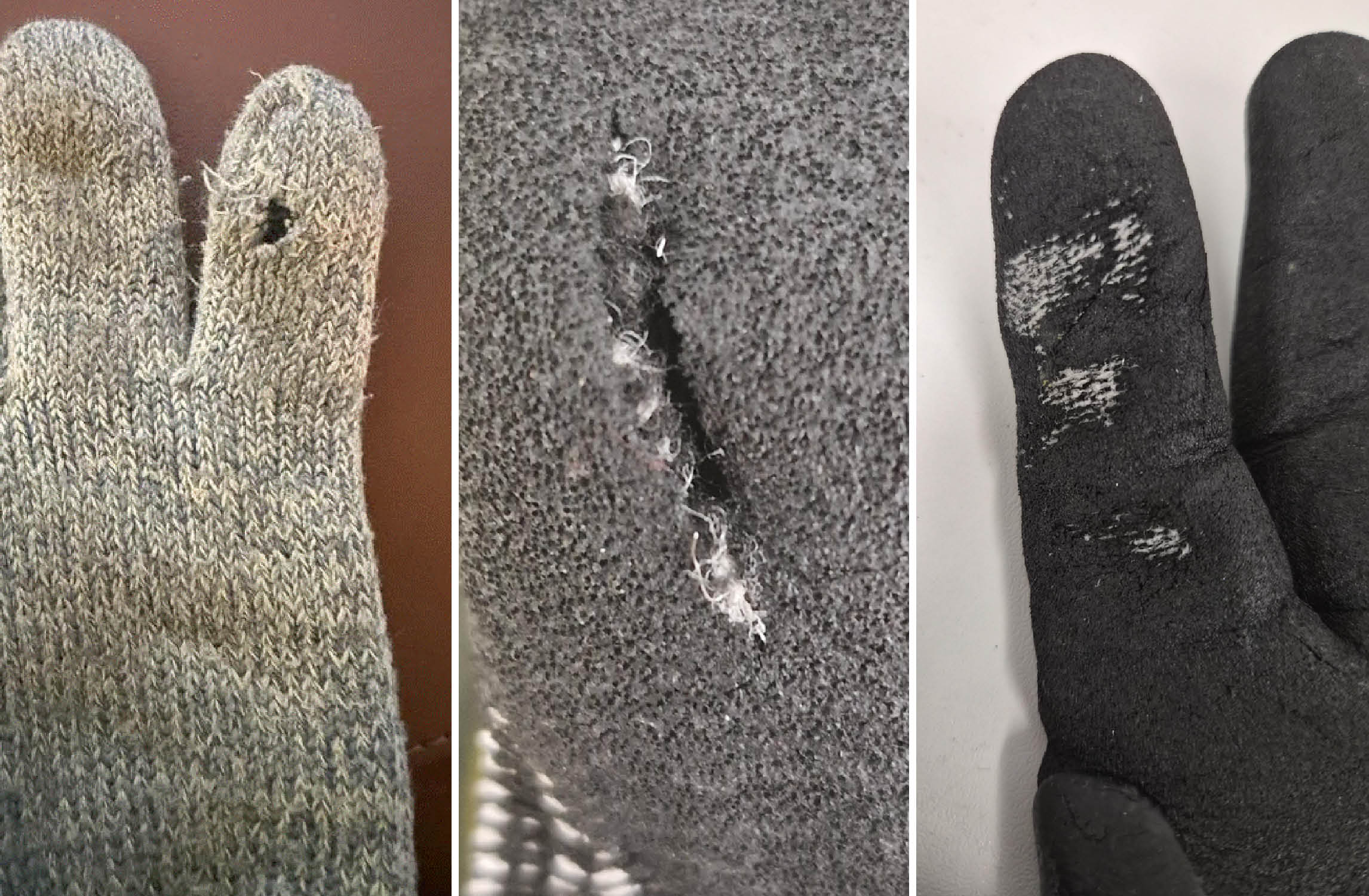
A clean appearance does not confirm protection
For chemical protective gloves, some chemicals can permeate intact material without creating a visible hole. The chemical, concentration and contact conditions matter. Replace in accordance with the manufacturer guidance and recommended service life rather than waiting for visible damage. A palm coating on a mechanical handling glove does not, by itself, establish chemical protection. If an unexpected splash occurs or the chemical is unknown, follow the site exposure procedure, remove the gloves safely and seek advice. Do not handle contamination with bare hands or return the gloves to use because the outside has dried. Embedded swarf, glass and other sharp debris also need attention; avoid probing or picking them out with unprotected fingers.
Washing is not a reset button
Only clean or launder a glove using a process permitted for that model. Check the specified detergent, temperatures, drying method and any stated wash limits. Instructions vary across a range. Washing cannot repair a cut or guarantee that hazardous contamination has been removed. Inspect again after cleaning and before reissue; if safe reuse cannot be established, replace the gloves.
Make replacement an everyday decision
For safety managers, a useful routine is to check gloves before use, recheck after damage or contamination is suspected, and review condition after the task. Give workers clear rejection criteria and ready access to suitable replacements. Record recurring wear patterns by task: repeated damage in the same place is a reason to review glove selection and the work process. HSE guidance also highlights maintenance responsibilities and replacement availability.
This guidance focuses on reusable gloves for mechanical handling. Electrical insulating gloves, chemical protective gloves and other specialist PPE require their own inspection, testing and replacement procedures. Single-use gloves must not be treated as reusable PPE.
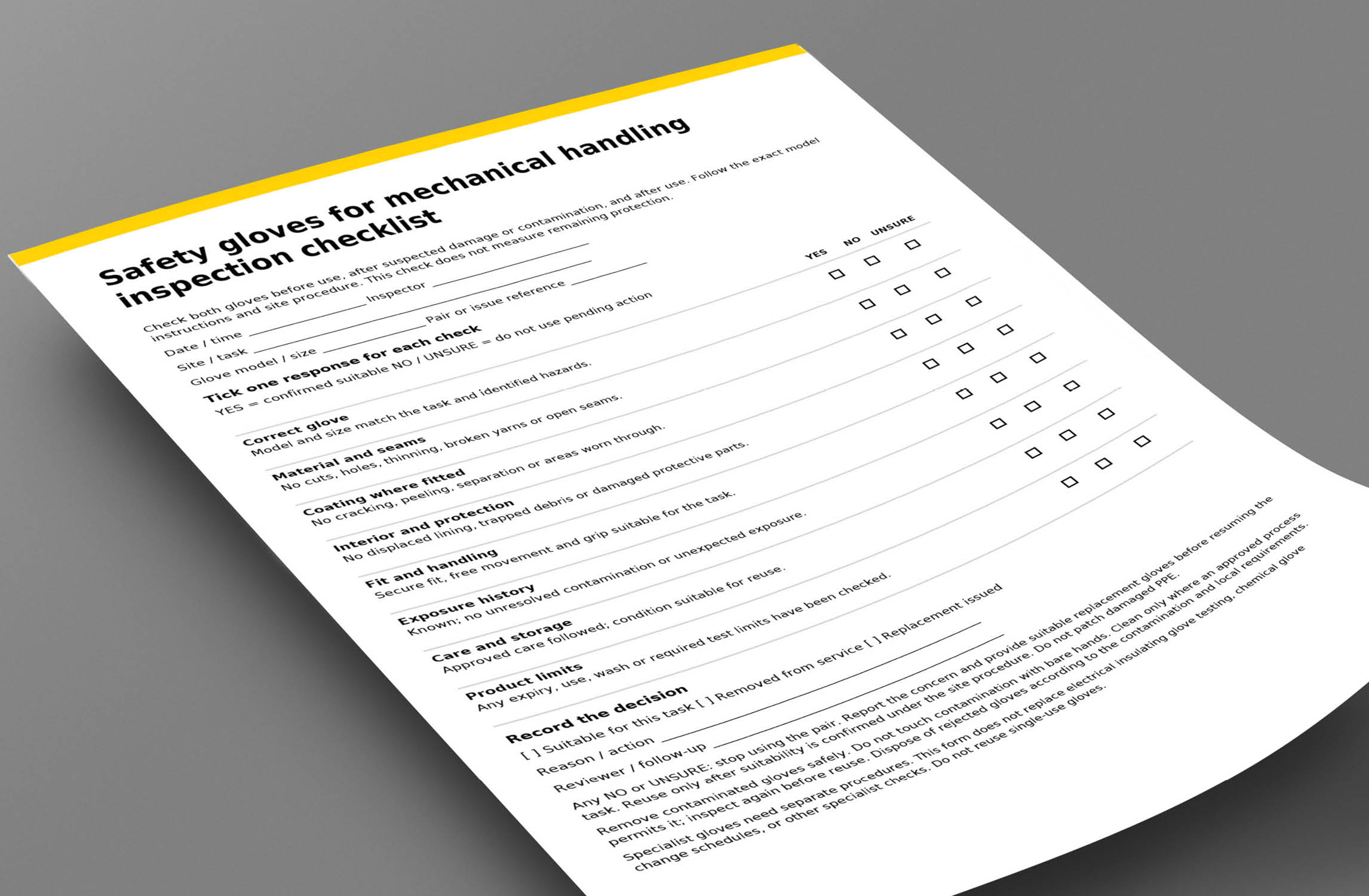
Download the glove inspection checklist
Use our handy checklist to support pre-use checks and toolbox talks. It covers material condition, coatings, fit, contamination and care history, with space to record the action taken. Keep it alongside the product instructions and your site procedure.
Unsure whether your current glove is right for the job? Speak to the Tilsatec team about your handling task and hand protection requirements.